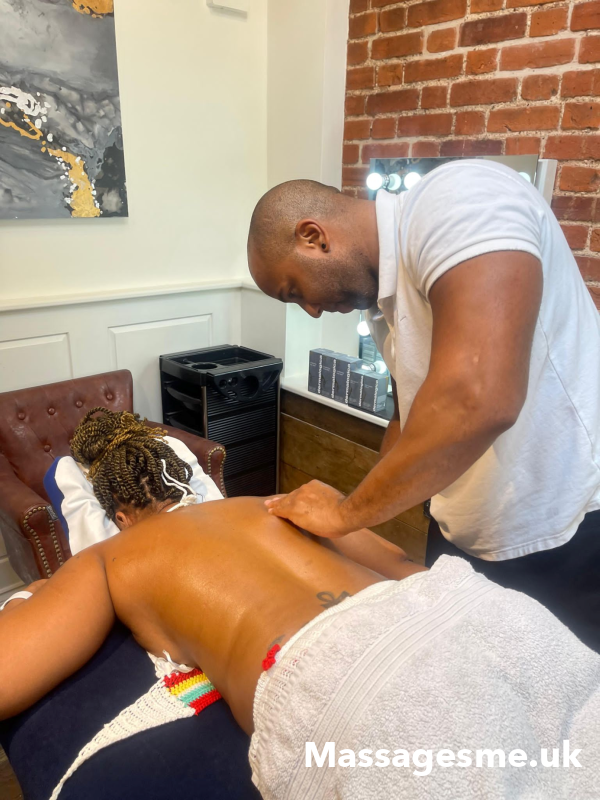
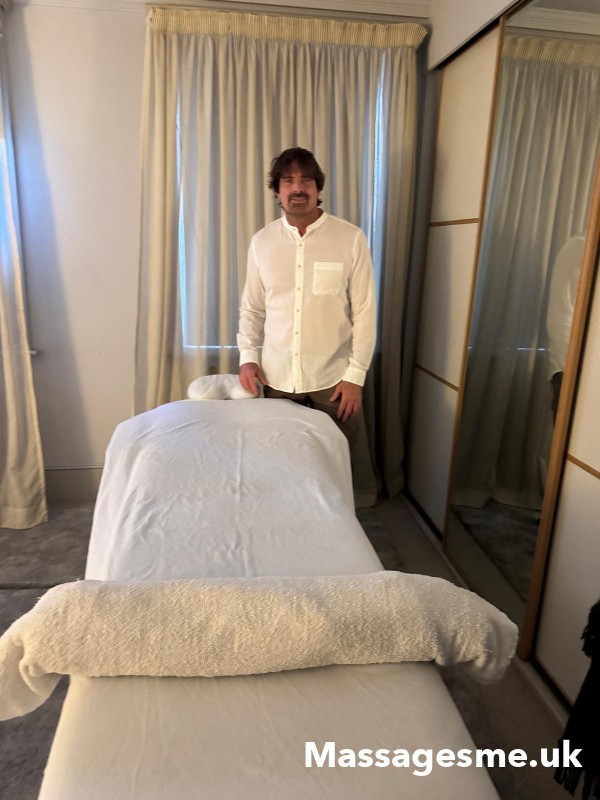
Pregnancy massage, also called prenatal massage, is a massage treatment adapted for the physical changes, comfort and safety considerations of pregnancy. It commonly focuses on areas such as the back, shoulders, hips, legs and feet while using supportive positioning and pressure suited to the individual stage of pregnancy.
The treatment is not one completely separate massage technique. Many pregnancy therapists adapt Swedish-style massage, gentle kneading and other familiar methods rather than using an entirely different system.
What makes pregnancy massage distinctive is the way the therapist modifies positioning, pressure, body areas and treatment setup for an expectant client. A therapist should also recognise symptoms or pregnancy complications that require medical or maternity assessment instead of massage.
What Is Pregnancy Massage?
Pregnancy massage is a professional massage adapted to the needs of someone pregnant.
The therapist considers factors such as changing body shape, comfortable positioning, pressure tolerance, pregnancy-related swelling and whether there are medical or maternity concerns that affect treatment.
The massage itself may include techniques similar to Swedish or relaxation massage, particularly gentle gliding and kneading movements.
Pregnancy Massage Is About Adaptation
There is no single universal prenatal massage routine. Treatment should be adapted to the individual pregnancy, stage of pregnancy, comfort and any advice from the client's maternity team.
What Happens During a Pregnancy Massage?
The appointment should begin with a conversation about how far along the pregnancy is, current symptoms, pregnancy complications, previous health issues and what areas the client wants massaged.
Positioning
Side-lying is commonly used, particularly as pregnancy progresses. Pillows or cushions can support the abdomen, head, back and legs.
A comfortably supported semi-reclined position may also be used for some parts of the treatment.
Massage Pressure
Pressure should be adapted according to comfort and the body area being treated.
Pregnancy does not mean every massage must be extremely light, but very firm techniques may be inappropriate in some areas or circumstances.
Draping
Professional draping should be maintained in the same way as during other massage treatments, with only appropriate treatment areas uncovered.
Changing Position
The therapist may help the client move between supported positions during the session rather than expecting long periods in one posture.
How Long Does Pregnancy Massage Last?
Many providers offer 60-minute and 90-minute pregnancy massage appointments, although shorter sessions are also available. Comfort matters more than reaching a particular duration, especially later in pregnancy.
Which Areas Can Be Massaged During Pregnancy?
A pregnancy massage may include:
- upper and lower back;
- shoulders and neck;
- arms and hands;
- hips and gluteal muscles where professionally appropriate and agreed;
- legs;
- feet;
- scalp or head massage where included.
The abdomen is not automatically included. Some therapists may offer gentle abdominal work where appropriately trained and where the client specifically wants it, but it should never be assumed to form part of a pregnancy massage.
What Does Pregnancy Massage Feel Like?
Most pregnancy massage is relaxation-focused and uses gentle to medium pressure.
A therapist may spend additional time around the back, shoulders, hips or legs if those are the areas where the client feels most uncomfortable.
The treatment should remain comfortable. Sharp pain, numbness, dizziness, unusual breathlessness or feeling unwell are reasons to stop and reassess rather than continuing the massage.
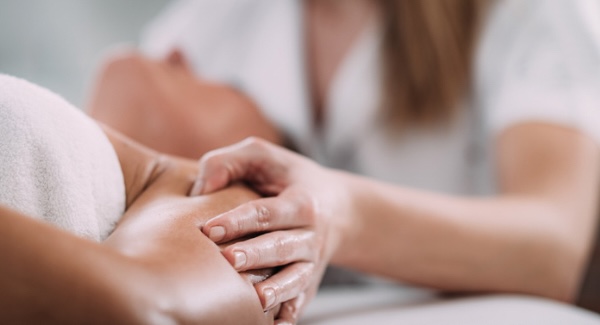
Is Pregnancy Massage Safe?
Massage can be suitable during an uncomplicated pregnancy when treatment is adapted appropriately.
The NHS includes massage among measures that may help with pregnancy-related back discomfort, and pregnancy organisations also recognise massage as a possible relaxation and wellbeing treatment.
However, pregnancy changes the context in which massage is provided. Symptoms such as sudden swelling, severe headache, unusual breathlessness, bleeding or significant abdominal pain should not be managed by massage without appropriate maternity assessment.
Contact Your Midwife or Maternity Team Before Massage If You Have:
- a high-risk or complicated pregnancy;
- pre-eclampsia or concerns about high blood pressure;
- vaginal bleeding;
- placental complications;
- significant or sudden swelling;
- severe or unusual headaches;
- known or suspected blood clots;
- significant calf pain, redness or one-sided swelling;
- preterm labour concerns;
- another pregnancy complication identified by your maternity team.
A massage therapist should recognise these limits and should not attempt to reassure a client that concerning pregnancy symptoms are simply muscular tension.
Can You Have a Massage in the First Trimester?
There is no general evidence-based rule stating that all professional massage must be avoided throughout the first trimester.
The first trimester naturally has a higher background rate of miscarriage, which historically led some spas and therapists to avoid providing treatment during this period.
That does not mean massage itself has been shown to cause miscarriage.
Some providers may still have their own first-trimester booking policies. If you have bleeding, significant pain, a history that concerns your maternity team or another pregnancy complication, discuss massage with your midwife, GP or obstetric team first.
Pregnancy Massage in the Second Trimester
As the abdomen grows, treatment positioning usually becomes increasingly important.
Side-lying massage with appropriate pillow support can provide comfortable access to the back, hips, shoulders and legs.
The second trimester is not inherently a special therapeutic window, but many clients find positioning relatively straightforward during this stage.
Pregnancy Massage in the Third Trimester
Massage can continue later in pregnancy when it remains comfortable, and there are no reasons for the maternity team to advise against it.
The therapist may need to adapt:
- positioning;
- session length;
- pressure;
- frequency of position changes;
- support under the abdomen, legs and back.
There is no universal point at which pregnancy massage suddenly becomes "too late". Comfort and individual medical circumstances matter more than a particular week number.
Should You Lie on Your Back During Pregnancy Massage?
Long periods lying completely flat on the back can become uncomfortable later in pregnancy and may cause symptoms such as dizziness in some people.
For this reason, side-lying or supported semi-reclined positioning is commonly preferred as pregnancy progresses.
If you become dizzy, nauseous, breathless or uncomfortable in any position, tell the therapist and change position.
Should Pregnancy Massage Use a Table With an Abdominal Hole?
Some massage tables or cushion systems are designed to accommodate the abdomen, but these are not essential for professional prenatal massage.
Many therapists prefer side-lying because it allows the abdomen to remain naturally supported rather than suspended through an opening.
The most appropriate position is the one that is comfortable, stable and suitable for the individual client.
Can Pregnancy Massage Help Back Pain?
Back discomfort is common during pregnancy, and the NHS lists massage among several measures that may provide comfort.
A therapist may use gentle massage around the lower back, upper back, hips and surrounding muscles.
However, severe, persistent or unusual back pain should not automatically be treated as ordinary muscular tension.
Can Pregnancy Massage Reduce Swelling?
Some swelling of the feet and ankles can occur during pregnancy, particularly later in the day.
However, swelling has important safety implications in pregnancy because sudden or pronounced swelling can sometimes be associated with complications.
A therapist should therefore not simply massage every swollen leg or ankle on the assumption that massage will drain excess fluid.
Sudden or Significant Swelling Needs Maternity Advice
If swelling is sudden, severe, mainly affects one leg, is accompanied by pain or redness, or occurs alongside symptoms such as severe headache or visual changes, contact an appropriate maternity professional rather than booking a massage to reduce it.
Can Pregnant Women Have Foot Massage?
Yes. There is no general rule that pregnant women cannot have their feet massaged.
The common claim that ordinary massage of particular points on the feet or ankles will automatically trigger labour is not established medical fact.
What matters more is whether there is unusual swelling, calf pain, reduced sensation, skin problems or another reason why massage should be avoided or modified.
Are There Pressure Points That Must Be Avoided During Pregnancy?
Some traditional massage, acupuncture and acupressure systems identify particular points as potentially influencing labour.
Evidence that ordinary massage pressure on these points causes labour is limited, and they should not be presented as dangerous buttons that automatically trigger contractions.
A pregnancy-trained therapist may still choose conservative techniques, particularly when a client is uncomfortable or has pregnancy complications.
Pregnancy Massage vs Regular Massage
The main difference is not necessarily the massage technique but how the treatment is adapted.
| Feature | Pregnancy Massage | Standard Massage |
|---|---|---|
| Positioning | Frequently side-lying or supported semi-reclined | Often face down and face up on a standard table |
| Pressure | Adapted for pregnancy and individual circumstances | Selected mainly according to treatment style and preference |
| Health screening | Includes pregnancy stage and maternity complications | General health and massage contraindications |
| Support | Additional pillows and positioning support commonly used | Usually less specialised positioning required |
| Therapist knowledge | Pregnancy-specific training is highly desirable | General massage training may be sufficient |
Pregnancy Massage and Swedish Massage
Many pregnancy massages are essentially adapted Swedish treatments.
Long gliding strokes and gentle kneading can be used while changing pressure, positioning and body coverage for pregnancy.
If you are comparing massage styles, Swedish massage using flowing full-body techniques provides the closest conventional comparison.
Pregnancy Massage vs Deep Tissue Massage
Pregnancy massage does not automatically exclude all firm pressure, but a standard deep tissue routine may not be appropriate without modification.
Very firm work over sensitive, swollen or medically concerning areas should be avoided.
If you normally prefer strong massage, tell the pregnancy-trained therapist so they can decide where firmer techniques may be appropriate rather than simply applying deep tissue pressure everywhere.
Pregnancy Massage vs Reflexology
Reflexology and prenatal massage are different treatments.
Reflexology focuses on mapped pressure areas of the feet and hands, while pregnancy massage can cover much broader areas such as the back, shoulders, hips, legs and feet.
Traditional reflexology explanations about points corresponding with organs or labour should not be treated as established anatomy.
Pregnancy Massage and Aromatherapy
Essential oils require additional consideration during pregnancy.
Not every oil or concentration used in ordinary aromatherapy massage is automatically suitable for someone pregnant.
If aromatherapy is included, the therapist should understand pregnancy-specific oil selection and dilution rather than simply using their standard blend.
If essential oils are important to you, compare the treatment with professional aromatherapy massage with appropriately diluted oils and ask specifically about pregnancy use.
Pregnancy Massage and Perineal Massage Are Different
Perineal massage is not the same thing as professional pregnancy body massage.
Perineal massage involves stretching tissue around the vaginal opening in preparation for birth and is normally self-administered or performed with a partner according to maternity guidance.
RCOG advises that antenatal perineal massage can be started from around 35 weeks and may reduce the likelihood of perineal tearing, particularly for first-time mothers.
It should therefore not be confused with the back, shoulder, leg or full-body massage services described on this page.
Massage During Labour
Massage may also be used as a comfort measure during labour.
This is usually very different from booking a conventional massage appointment. A birth partner or maternity support person may provide massage to the back or shoulders, depending on what feels helpful at the time.
The NHS includes massage among suggestions for support during labour.
Pregnancy Massage After Birth
Postnatal massage is a separate stage of care.
After birth, timing depends on how the mother feels, the type of delivery, wound healing and whether there have been complications.
There is no universal rule that everyone should begin massage after a fixed number of days or weeks.
After caesarean birth or complicated delivery, follow advice from the maternity or healthcare team before massage around healing tissues.
Can Pregnancy Massage Be Provided at Home?
Yes. Mobile pregnancy massage can be convenient because it removes the need to travel and allows the client to relax at home afterwards.
The therapist should bring suitable equipment and enough cushions or supports to create a safe side-lying or semi-reclined setup.
Massages Me can help you find mobile pregnancy massage therapists providing professional prenatal home visits across the UK.
Pregnancy Massage at Spas and Wellness Centres
Pregnancy massage is offered at many spas and treatment centres, but not every general massage therapist at a venue necessarily provides prenatal treatments.
Check that the appointment is specifically offered as pregnancy massage and ask about the therapist's experience before booking.
You can compare UK spas and wellness centres offering specialist pregnancy and prenatal massage treatments.
How Much Does Pregnancy Massage Cost in the UK?
There is no standard UK price.
Fees vary according to appointment length, location, therapist training, treatment setting and whether the therapist travels to your home or hotel.
| Pricing Factor | Why It Can Affect the Cost |
|---|---|
| Session length | Short and longer prenatal massage appointments use different amounts of therapist time. |
| Pregnancy training | Specialist prenatal massage training may influence pricing. |
| UK location | Massage prices vary between London, major cities and regional areas. |
| Treatment venue | Spas, private treatment rooms and specialist maternity wellness providers may charge differently. |
| Mobile treatment | Travel, equipment and additional pregnancy-support cushions may affect home-visit fees. |
Choosing a Pregnancy Massage Therapist
Pregnancy-specific experience matters because the therapist needs to understand positioning, common pregnancy changes and symptoms that should not simply be massaged.
Questions Worth Asking Before Booking
- Have you completed specific pregnancy or prenatal massage training?
- Which stages of pregnancy do you normally treat?
- What positions do you use during the massage?
- What cushions or pregnancy supports do you provide?
- How do you adjust pressure during pregnancy?
- What symptoms would make you postpone treatment or recommend maternity advice?
- Do you use essential oils, and are they appropriate for pregnancy?
- Do you hold professional insurance covering pregnancy massage?
Be cautious about therapists who guarantee easier labour, claim massage prevents pregnancy complications or insist that they can diagnose maternity problems through massage.
Massages Me allows you to compare pregnancy massage therapists and professional prenatal treatments available throughout the UK, review individual services and contact therapists directly about pregnancy experience and availability.
Preparing for Pregnancy Massage
Preparation is straightforward.
- Tell the therapist how many weeks pregnant you are.
- Disclose complications or concerns raised by your maternity team.
- Mention swelling, calf pain or unusual symptoms.
- Explain which body areas feel uncomfortable.
- Tell the therapist if any position makes you dizzy or breathless.
- Ask about oils or products if you have skin sensitivity.
After Pregnancy Massage
There is no requirement for special detoxification after prenatal massage.
Normal hydration is sufficient unless your maternity team has given you specific fluid advice.
You may feel relaxed or sleepy after treatment, so take your time standing up and changing position.
Contact your maternity team if you experience concerning symptoms such as bleeding, significant abdominal pain, sudden swelling, severe headache or unusual shortness of breath. These should not be attributed to a normal massage reaction.
Related Pregnancy-Friendly Massage Treatments
Finding Pregnancy Massage Near You in the UK
Pregnancy massage is available from independent prenatal massage therapists, mobile practitioners, spas and maternity-focused wellness providers across the UK.
When choosing a provider, check specific pregnancy training rather than assuming every massage therapist offers appropriate prenatal treatment.
Positioning, professional judgement and the ability to recognise when symptoms require maternity assessment are more important than claims about specialist techniques or guaranteed pregnancy benefits.
Looking for Pregnancy Massage in the UK?
Compare professional prenatal massage therapists, mobile providers and treatment venues on Massages Me, then contact practitioners directly about pregnancy training, positioning, massage pressure, appointment lengths, prices and availability near you.