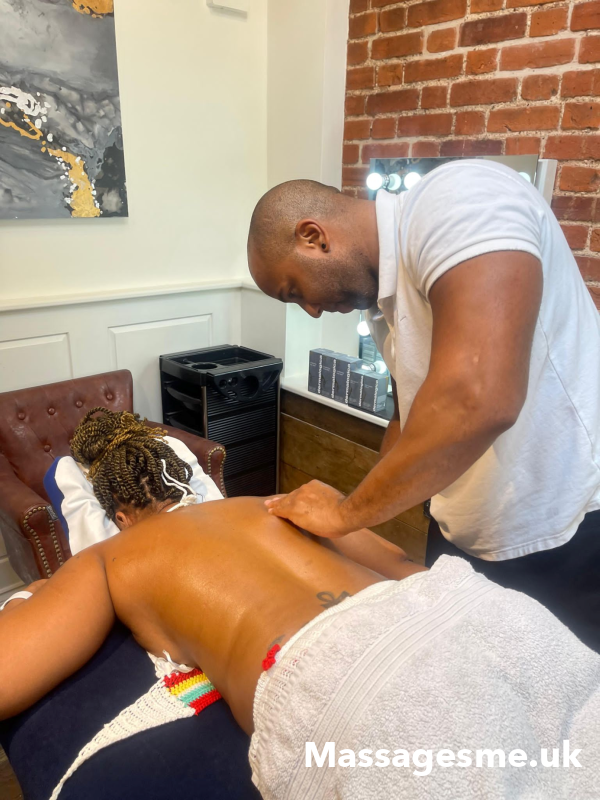
Myofascial release therapy is a form of hands-on soft-tissue treatment that focuses on fascia, the connective tissue associated with muscles and other structures throughout the body. Practitioners commonly use slow, sustained pressure rather than the continuous gliding and kneading movements associated with a conventional relaxation massage.
The treatment may feel surprisingly gentle. Some techniques involve the therapist placing their hands on an area and maintaining pressure or applying a slow stretch for an extended period, while others use firmer, direct pressure or movement-based techniques.
Myofascial release is used by some massage therapists, physiotherapists and other manual therapy practitioners. It may also be incorporated into sports massage, rehabilitation or broader soft-tissue treatment rather than offered as a completely separate appointment.
What Is Myofascial Release Therapy?
Myofascial release is a manual therapy approach in which pressure or stretch is applied to soft tissue and maintained rather than repeatedly moved across the body.
The word myofascial refers to muscles and fascia. Fascia is connective tissue found throughout the body, including around and between muscles and other structures.
Different practitioners use the term myofascial release in somewhat different ways. Some provide very gentle sustained techniques, while others incorporate firmer pressure, movement or techniques that overlap with deep tissue massage and other forms of manual therapy.
Myofascial Release Is Not One Standardised Technique
There are several schools and approaches to myofascial treatment. The amount of pressure, treatment sequence and techniques can therefore differ considerably between therapists. Ask what a practitioner actually means by myofascial release before booking.
What Is Fascia?
Fascia is connective tissue found throughout the body. It forms sheets and layers around and between muscles, contributing to the organisation and movement of different tissues.
Rather than being a separate wrapping that can be peeled away from muscles, fascia forms part of an interconnected soft-tissue system.
Research into fascia and its possible role in pain, movement and tissue mechanics continues to develop. This makes it sensible to be cautious about simple explanations claiming that every persistent pain or movement problem comes from "stuck fascia".
How Does Myofascial Release Work?
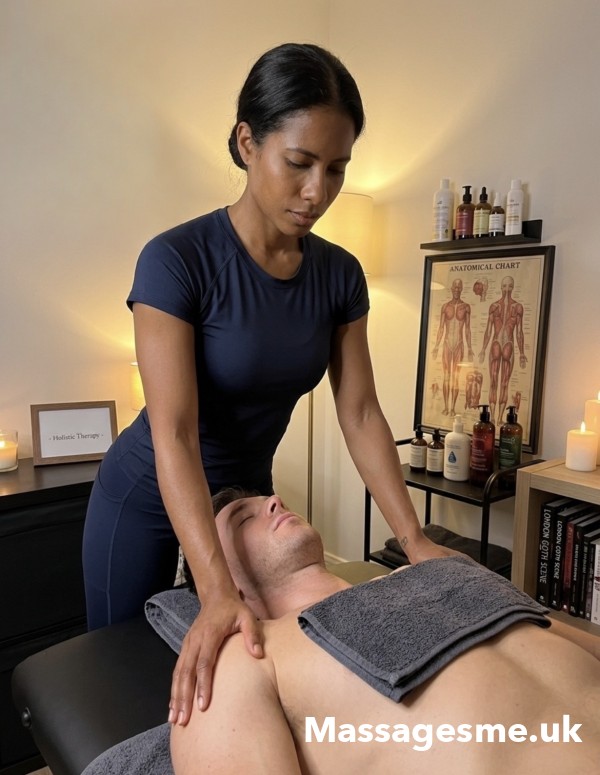
During myofascial release, the therapist may place the hands on an area and gradually apply pressure or stretch while maintaining contact.
Unlike an oil massage, there may be relatively little sliding over the skin. This allows the therapist to maintain contact with a particular area while applying slow movement or sustained pressure.
Some therapists describe feeling changes in tissue resistance during the technique and then gradually changing direction or moving onto another area.
The treatment does not require the fascia to be physically "broken apart". Explanations about permanently melting adhesions, realigning the entire body, or mechanically restructuring fascia during a single massage should be treated with caution.
Direct and Indirect Myofascial Release
Practitioners sometimes distinguish between direct and indirect approaches.
Direct Myofascial Release
The therapist works more deliberately into an area of tissue resistance using sustained pressure or stretch. This can feel firmer than indirect techniques.
Indirect Myofascial Release
The practitioner uses lighter contact and follows the direction in which the tissue moves most comfortably rather than applying stronger pressure against resistance.
Sustained Pressure
Pressure may be maintained on an area for longer than during ordinary massage rather than repeatedly moving backwards and forwards.
Movement-Based Techniques
The therapist may ask you to move a limb or body area while contact is maintained, depending on their training and treatment approach.
What Does Myofascial Release Feel Like?
The treatment can feel quite different from conventional massage.
A therapist may place both hands on an area and move only slightly for a period of time. You may notice gradual stretching, pressure or warmth rather than continuous stroking.
Some areas can feel sensitive when sustained pressure is applied, but the treatment should remain within a manageable level of comfort.
Very aggressive pressure is not automatically more effective and is not required simply because the therapist describes an area as restricted.
Does Myofascial Release Hurt?
It should not need to be severely painful.
Some areas may feel tender, particularly when you have existing muscular discomfort, but the therapist should adjust pressure according to your response.
Sharp, burning, electric or worsening pain is a reason to stop or change the technique.
A professional therapist should not tell you that severe pain proves fascia is releasing correctly.

What Happens During a Myofascial Release Session?
The practitioner should begin by asking why you are booking treatment, where you feel discomfort or restriction and whether there are relevant injuries or health conditions.
Initial Assessment
A therapist may look at comfortable movement, ask where symptoms occur and feel different soft-tissue areas before beginning treatment.
This should not be presented as a way to diagnose complex medical or structural conditions from touch alone.
Beginning Treatment
Myofascial techniques are often performed directly against the skin because the therapist needs stable contact rather than a slippery surface.
This means substantially less oil or lotion may be used than during Swedish or relaxation massage.
Sustained Techniques
The therapist may maintain contact with one area before gradually moving in a particular direction or progressing to another region.
Movement
Some practitioners ask clients to slowly move during treatment to combine manual contact with active movement.
How Long Does Myofascial Release Take?
There is no standard treatment duration. Focused sessions may concentrate on one or two regions, while longer appointments can incorporate myofascial techniques into a broader, full-body treatment or rehabilitation.
Why Do People Choose Myofascial Release?
People commonly choose myofascial release because they want a slower manual therapy style or have an area that feels tight or restricted and prefer something different from ordinary massage.
It may appeal if you:
- prefer sustained pressure instead of continuous massage strokes;
- want focused soft-tissue work around a particular area;
- find very vigorous massage uncomfortable;
- want to compare a fascial approach with deep tissue massage;
- are receiving physiotherapy or rehabilitation where soft-tissue techniques are being incorporated;
- are interested in learning safe self-myofascial release techniques.
The treatment should not be sold as a guaranteed way to correct posture, permanently realign the body, eliminate chronic pain or prevent future injuries.
Can Myofascial Release Help With Pain?
Manual therapies including myofascial techniques may help some people experience short-term changes in pain or movement, but results vary, and the evidence depends on the condition being treated.
Pain is complex and is not always explained by one tight muscle, trigger point or fascial restriction.
If pain is persistent, severe, worsening or unexplained, appropriate assessment is more important than repeatedly applying stronger manual pressure.
Persistent Pain Needs Broader Assessment
Chronic pain can involve many biological, physical and psychological factors. Massage and manual therapy may be part of management, but they should not be treated as the complete solution.
Myofascial Release for Fibromyalgia
Myofascial release is sometimes used by people with fibromyalgia, but this is an area where treatment should be particularly individualised.
Some research suggests manual therapy or myofascial release may produce modest improvements for some people, but this should not be turned into a promise that MFR treats the underlying condition.
People with widespread sensitivity may need much lighter pressure than clients booking treatment for ordinary muscular tightness.
Myofascial Release and Trigger Points
Myofascial release and trigger point therapy overlap, but they are not identical.
Trigger point techniques usually concentrate on relatively small tender areas commonly described as muscle knots or trigger points.
Myofascial release may use broader sustained contact and can extend across a larger tissue area.
If small, focal areas of tenderness are your main reason for booking, trigger point therapy using focused pressure techniques may be a more specific treatment to compare.
Myofascial Release vs Deep Tissue Massage
Both treatments can involve sustained pressure, but their typical style differs.
| Feature | Myofascial Release | Deep Tissue Massage |
|---|---|---|
| Main focus | Fascia and associated soft tissues | Firm targeted massage of muscles and soft tissues |
| Typical movement | Slow sustained pressure or stretch | Slow strokes, compression and focused pressure |
| Oil | Often little or none | Oil or another massage medium may be used |
| Pressure | Can range from gentle to firm | Usually medium-firm to firm |
| Treatment feel | Held, slow and sometimes subtle | More recognisably massage-based |
If you specifically enjoy firm muscular massage with slow strokes and concentrated pressure, deep tissue massage for targeted firm-pressure bodywork may suit you better.
Myofascial Release vs Lymphatic Drainage
These are very different forms of manual therapy despite both sometimes being described as gentle treatments.
Manual lymphatic drainage uses specialised light movements to encourage lymph fluid movement.
Myofascial release focuses instead on fascia and soft tissue and may use substantially more sustained pressure.
Lymphatic drainage is particularly associated with lymphoedema management, while myofascial release is generally used within musculoskeletal and manual therapy settings.
Myofascial Release vs Swedish Massage
Swedish massage is usually much more continuous.
It commonly uses oil and techniques such as gliding, kneading and rhythmic movements across larger muscle areas.
Myofascial release tends to involve slower contact with fewer repetitive strokes.
If you want a conventional full-body treatment rather than a focused manual therapy approach, Swedish massage may be more suitable.
Myofascial Release vs Sports Massage
Sports massage is organised more around physical activity, training and specific muscle groups used during sport.
A sports massage therapist may incorporate myofascial techniques into a treatment, but sports massage can also include other methods such as compression, stretching and deeper massage.
If your treatment goal relates mainly to training or sport, sports massage for active people and targeted soft-tissue work may provide a broader treatment format.
Can Myofascial Release Improve Movement?
Some clients report feeling temporarily freer or more comfortable after manual therapy, and changes in range of movement may occur following treatment.
However, mobility depends on many factors, including joints, muscles, strength, nervous-system responses, injury history and activity.
Myofascial release should therefore not be presented as physically unlocking the body or permanently restoring a supposedly ideal fascial alignment.
Can Myofascial Release Correct Posture?
No manual treatment can guarantee permanent correction of posture simply by applying pressure to fascia.
Posture varies naturally and is influenced by movement habits, anatomy, strength, work environment, comfort and many other factors.
If posture or movement is causing significant difficulty, physiotherapy or another appropriate musculoskeletal assessment may be more useful than repeatedly trying to "release" individual tissues.
Does Myofascial Release Release Stored Trauma?
The idea that emotional trauma is physically stored inside fascia and can be mechanically released through pressure is not established medical science.
People can experience emotions during any relaxing, painful or personally meaningful bodywork treatment, but this should not be interpreted as proof that trauma has been removed from connective tissue.
Massage therapists should not claim to treat psychological trauma unless they also have an appropriate professional role and qualifications for that work.
Self-Myofascial Release
Self-myofascial release is a broad term commonly used for self-massage with tools such as foam rollers and massage balls.
These techniques can feel useful when you want temporary pressure or movement around tired muscles, but they do not need to be aggressively painful.
Foam Roller
A foam roller allows broad pressure across areas such as the thighs, calves or upper back.
Massage Ball
A ball provides more focused pressure and can be used against a wall where body weight is easier to control.
Gentle Stretching
Comfortable movement and stretching can be combined with self-massage rather than treating pressure alone as the objective.
Movement Breaks
Changing position and moving regularly may be more useful than repeatedly rolling one painful area for extended periods.
How to Use a Foam Roller Safely
Start with moderate pressure rather than placing your entire body weight onto a painful area immediately.
Move slowly and avoid rolling directly over recent injuries, open wounds, unstable joints or areas where pressure produces sharp pain, tingling or numbness.
A foam roller is a self-massage tool, not a diagnostic device. Finding a tender spot does not prove that you have discovered damaged fascia or a trigger point that must be broken apart.
Can Myofascial Release Be Provided at Home?
Yes. Myofascial release can be provided during a mobile massage appointment because relatively little specialist equipment is required beyond a stable, portable treatment table.
Some therapists may also bring massage balls or other tools depending on their treatment style.
Massages Me can help you find mobile myofascial release therapists providing specialist soft-tissue home treatments across the UK.
Myofascial Release at Clinics and Treatment Centres
Myofascial release may be available through massage therapists, physiotherapy practices, sports therapy clinics and other manual therapy providers.
The practitioner's professional background can influence how the treatment is delivered. A physiotherapist, for example, may incorporate manual therapy within exercise and rehabilitation rather than providing a standalone massage appointment.
You can compare UK massage clinics and wellness centres offering myofascial and specialist soft-tissue treatments and check individual practitioner qualifications before booking.
How Much Does Myofascial Release Cost in the UK?
There is no standard UK price for myofascial release.
Fees depend on practitioner qualifications, treatment duration, location, professional setting and whether the appointment forms part of physiotherapy, sports therapy or massage treatment.
| Pricing Factor | Why It Can Affect the Cost |
|---|---|
| Practitioner background | Massage therapists, sports therapists and physiotherapists may use different pricing structures. |
| Session length | Focused and longer multi-area treatments require different amounts of practitioner time. |
| Specialist training | Additional training in myofascial or manual therapy techniques may influence fees. |
| UK location | Professional treatment prices vary between London, other major cities and regional areas. |
| Mobile treatment | Travel time, parking and distance may affect home-visit pricing. |
Is Myofascial Release Safe?
Myofascial release is generally less forceful than some deep tissue techniques, but sustained pressure is not appropriate over every area or in every circumstance.
Tell the Practitioner Before Treatment If You Have:
- a recent fracture, injury or operation;
- significant osteoporosis or bone fragility;
- a known or suspected blood clot;
- medication or a condition that increases bruising or bleeding;
- open wounds, burns or an active skin condition;
- acute infection, fever or illness;
- pregnancy or possible pregnancy;
- persistent neurological symptoms such as weakness, tingling or loss of sensation;
- severe, unexplained or rapidly worsening pain.
A practitioner should modify, postpone or refer treatment when symptoms suggest that manual therapy is not the appropriate first step.
Myofascial Release During Pregnancy
Some gentle soft-tissue techniques may be suitable during pregnancy, but positioning, pressure and treatment areas may need modification.
Tell the practitioner you are pregnant before booking and choose someone with appropriate pregnancy massage or physiotherapy experience.
If the pregnancy is high risk or complicated, obtain maternity or healthcare advice before treatment.
How Often Should You Have Myofascial Release?
There is no evidence-based schedule that every client should follow.
Some people book occasional sessions because they enjoy the treatment. Others may receive manual therapy temporarily as part of a broader rehabilitation programme.
A practitioner should not automatically prescribe an indefinite weekly course based solely on the claim that fascia keeps tightening again.
If symptoms continually return, it may be more useful to consider movement, exercise, workload and appropriate medical or physiotherapy assessment alongside passive treatment.
Choosing a Myofascial Release Therapist
The term myofascial release is used by practitioners from several professional backgrounds, so ask what training they have actually completed.
Questions Worth Asking Before Booking
- What myofascial release training have you completed?
- Do you use direct, indirect or mixed techniques?
- How much pressure do you normally use?
- Do you combine MFR with massage or movement?
- Do you work with the type of symptoms I am experiencing?
- How do you approach persistent or unexplained pain?
- Will you refer me for assessment if massage appears inappropriate?
- Do you hold appropriate professional insurance?
Be cautious about practitioners who guarantee permanent structural realignment, promise to break up all fascial adhesions, diagnose numerous conditions through palpation alone or claim to release psychological trauma stored within fascia.
Massages Me allows you to compare myofascial release therapists and specialist manual therapy treatments throughout the UK, review practitioner profiles and contact providers directly about techniques, training and availability.
Preparing for Myofascial Release Therapy
There is very little preparation required.
- Explain where you feel pain, tension or restricted movement.
- Tell the practitioner about relevant injuries and medical conditions.
- Mention medication that may affect bruising or bleeding.
- Wear or bring clothing suitable for the treatment format.
- Tell the therapist if sustained pressure becomes painful or causes neurological symptoms.
- Do not assume that stronger treatment produces a more permanent release.
After Myofascial Release
Some people notice mild temporary tenderness after sustained or firmer manual pressure.
There is no need for a special detoxification routine or excessive water intake after treatment.
Normal movement and hydration are generally sufficient unless you have been given different advice for a medical reason.
If treatment leads to significant pain, extensive bruising, weakness, persistent numbness or worsening symptoms, seek appropriate advice rather than assuming that this represents a successful fascial release.
Related Myofascial and Soft-Tissue Treatments
Finding Myofascial Release Therapy Near You in the UK
Myofascial release is available from selected massage therapists, sports therapists, physiotherapists and manual therapy practitioners throughout the UK.
Because practitioners use the term in different ways, compare more than the treatment name. Check professional background, myofascial training, pressure style, whether movement or exercise is incorporated and how the practitioner approaches persistent pain.
If your main concern is a diagnosed injury, significant movement problem or long-standing pain condition, the practitioner's assessment skills may matter more than simply finding the nearest massage provider.
Looking for Myofascial Release in the UK?
Compare professional myofascial release therapists, mobile practitioners and specialist treatment venues on Massages Me, then contact providers directly about techniques, pressure, appointment lengths, prices and availability near you.