Ayurvedic massage is an oil-based treatment rooted in Ayurveda, the traditional Indian system of health and wellbeing. One of its best-known forms is Abhyanga, a full-body treatment characterised by generous use of warm oil, rhythmic strokes and an approach that may be adapted according to traditional Ayurvedic principles.
Compared with many Western massage styles, Ayurvedic massage places particular emphasis on warmth, oil and continuity of movement. Some practitioners also incorporate scalp massage, work around the joints and traditional marma points as part of the treatment.
The experience can vary considerably between providers in the UK. Some therapists specialise in traditional Ayurvedic bodywork and conduct consultations based on the doshas, while others incorporate Ayurvedic-inspired techniques into a broader massage practice. Understanding that difference can help you choose the treatment you actually want.
What Is Ayurvedic Massage?
Ayurvedic massage belongs to a much wider traditional system known as Ayurveda. Originating in India, Ayurveda includes approaches to diet, lifestyle, herbal preparations, yoga and body treatments.
Massage with oil has an important place within that tradition. Abhyanga generally refers to applying warm oil across the body using repetitive, flowing movements. Depending on the practitioner, the massage may also include circular movements around joints, work on the scalp and feet, and attention to traditional marma points.
Not every treatment advertised as Ayurvedic massage follows a complete traditional Abhyanga protocol. Some UK therapists provide authentic Ayurvedic bodywork, while others use selected techniques or Ayurvedic oils within a more conventional massage session.
Abhyanga and Ayurvedic Massage
The terms are often used interchangeably, but Ayurvedic massage is the broader description. Abhyanga is a specific traditional practice involving the application of oil and rhythmic massage. If you specifically want Abhyanga, check that the practitioner actually provides it.
What Are the Three Doshas?
Traditional Ayurveda describes three doshas called Vata, Pitta and Kapha. These are concepts used within Ayurvedic philosophy to describe different patterns and qualities in the body and mind.
They should not be confused with anatomical structures, hormones or medically measurable biological systems. They belong to the traditional Ayurvedic framework.
Vata
Traditionally associated with movement and the qualities of air and space. An Ayurvedic practitioner may favour warming oils and slower, grounding massage when working according to Vata principles.
Pitta
Traditionally associated with heat and transformation. Practitioners following Ayurvedic principles may select lighter or cooling oils and adapt the treatment accordingly.
Kapha
Traditionally associated with stability and the qualities of earth and water. A practitioner may use a somewhat more stimulating massage style when following a Kapha-based approach.
A traditional Ayurvedic consultation may consider these concepts before the massage. However, not every person needs to know their supposed dosha before enjoying an Ayurvedic-style oil massage.
What Happens During an Ayurvedic Massage?
Your appointment should normally begin with a consultation. The therapist may ask about your health, massage preferences, skin sensitivities and what you want from the session.
A practitioner working within a traditional Ayurvedic framework may ask additional questions before deciding which oil and massage approach to use.
Preparing the Oil
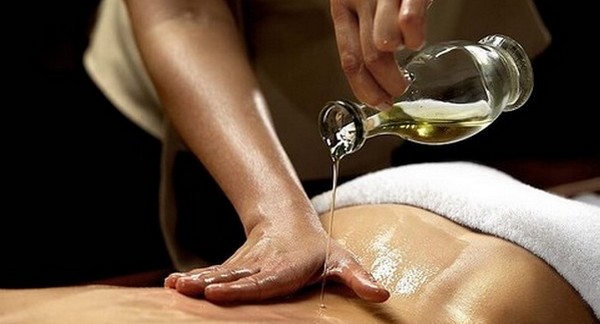
One of the most recognisable features of Abhyanga is the generous use of oil. The massage oil is commonly warmed before application, although temperature should always remain comfortable and safe for the skin.
Applying the Oil
The therapist spreads the oil across the areas being treated and begins rhythmic massage movements. Long strokes may be used along the limbs and larger body areas, with circular movements around joints.
Full-Body Massage
Abhyanga is commonly offered as a full-body treatment. Depending on the provider and session booked, this may include the back, shoulders, arms, hands, legs and feet, with professional draping used throughout.
Scalp and Head Massage
Some traditional treatments include the scalp and head. Ask beforehand whether scalp oil is included, particularly if you would prefer to keep oil out of your hair.
Resting After Treatment
The therapist may allow a short period to rest before you dress. Because considerably more oil can be used than during a conventional massage, it is sensible to wear clothing that you do not mind putting on after an oily treatment.
How Long Does Ayurvedic Massage Last?
Many professional Ayurvedic massage appointments last around 60 to 90 minutes, although treatment length varies. Longer appointments may allow more time for full-body work, the scalp and feet, while shorter sessions may concentrate on selected areas.
Techniques Used in Ayurvedic Massage
There is no single sequence used by every therapist. Techniques depend on training, the specific Ayurvedic treatment being offered, and how closely the practitioner adheres to traditional practice.
Rhythmic Flowing Strokes
Repeated gliding movements are a characteristic part of Abhyanga. The combination of oil, warmth, and a steady rhythm creates an experience quite different from a dry massage or a highly targeted treatment.
Circular Movements Around the Joints
Therapists may use circular massage around areas such as the shoulders, elbows, wrists, hips, knees and ankles. Comfortable joint movements may also be incorporated where appropriate.
Marma Points
Traditional Ayurveda describes marma points at specific locations around the body. A practitioner trained in this approach may apply gentle or focused contact to selected points during the treatment.
Marma points belong to traditional Ayurvedic theory and should not be presented as established anatomical structures or as a way to diagnose medical conditions.
Scalp and Foot Techniques
Head, scalp and foot massage can form a significant part of some Ayurvedic treatments. This can make Abhyanga particularly appealing to people who enjoy a comprehensive massage rather than a treatment focused only on the back and shoulders.
Which Oils Are Used for Ayurvedic Massage?
Oil is central to traditional Abhyanga. Sesame oil is particularly associated with Ayurvedic massage, but practitioners may use several different carrier oils and herbal preparations.
Examples you may encounter include:
- Sesame oil: traditionally regarded as warming and commonly associated with Abhyanga;
- Coconut oil: traditionally considered more cooling and often used in warmer conditions;
- Sunflower oil: a lighter carrier oil that may be used by some practitioners;
- Herbal oils: preparations containing herbs traditionally used within Ayurvedic practice;
- Scalp oils: specialised preparations that may include ingredients such as Brahmi or Bhringraj.
Traditional associations attached to particular oils are not the same as proven medical effects. A responsible therapist should also consider practical issues such as allergies, skin sensitivity and the ingredients contained in the product.
Check the Oil Before Treatment
Tell your therapist if you have nut, seed, fragrance or skincare allergies. If you have particularly sensitive skin, ask exactly which oil and ingredients will be used rather than assuming that a natural or herbal product cannot cause irritation.
What Are the Benefits of Ayurvedic Massage?
For most clients in the UK, the most straightforward reasons to choose Ayurvedic massage are relaxation, enjoyable touch, warm oil and the distinctive style of the treatment.
The massage itself may help you feel physically relaxed and less tense, while the oil provides lubrication during treatment and can leave the skin feeling moisturised and soft.
People commonly choose Ayurvedic massage for:
- deep relaxation and personal downtime;
- a warm, oil-rich full-body treatment;
- general muscular relaxation;
- a slower and more rhythmic massage experience;
- scalp, foot and full-body massage within one appointment;
- an interest in Ayurveda and traditional Indian wellness practices;
- skin moisturisation from suitable massage oils.
Claims that Abhyanga detoxifies the body, balances hormones, boosts immunity or treats specific diseases go beyond what should be promised by a professional massage service. Ayurvedic massage is better presented as a traditional complementary and wellbeing practice rather than a medical treatment.
Ayurvedic Massage vs Swedish Massage
Both can provide a flowing full-body massage, but their traditions and treatment styles are different.
| Feature | Ayurvedic Massage | Swedish Massage |
|---|---|---|
| Origins | Traditional Indian Ayurvedic practice | Western massage tradition |
| Oil | Warm oil is a central feature | Oil or lotion is generally used as a massage medium |
| Traditional framework | May incorporate doshas and marma concepts | Does not use Ayurvedic concepts |
| Pressure | Often gentle to medium | Can range from gentle to relatively firm |
| Scalp treatment | May be an important part of the session | Depends on the massage booked |
If you want a familiar Western massage where pressure and muscle work are the main considerations, traditional Swedish full-body massage may be the better fit. If warm oil and the traditional Ayurvedic approach appeal to you, Abhyanga offers a distinctly different experience.
Ayurvedic Massage vs Aromatherapy Massage
Both treatments make oil an important part of the experience, but they should not be confused.
Aromatherapy massage combines massage with diluted essential oils, with fragrance forming an important part of the session. Ayurvedic massage traditionally uses warm carrier or herbal oils within the Ayurvedic framework.
An Ayurvedic oil may have a noticeable natural aroma, but that does not automatically make the treatment aromatherapy.
Ayurvedic Massage vs Indian Head Massage
These treatments share Indian roots, but their scope is very different.
Indian head massage concentrates on the head, scalp, neck and shoulders, whereas Abhyanga is usually a more extensive oil-based body treatment.
If your priority is the scalp and upper body and you do not want a full-body oil massage, Indian head massage may be more practical. If you want the broader traditional oil treatment, Ayurvedic massage is the more appropriate choice.
Is Ayurvedic Massage Safe?
Ayurvedic massage is generally suitable for many healthy adults when provided appropriately, but the same basic precautions that apply to other massage treatments remain important.
Because Abhyanga uses considerable amounts of oil, skin allergies and sensitivities deserve particular consideration.
Speak to the Therapist Before Booking If You:
- have allergies or sensitive skin;
- have an active rash, skin infection, open wound or recent burn;
- are pregnant or may be pregnant;
- have recently had surgery or a significant injury;
- have a history of blood clots or another condition affecting circulation;
- have a fever, acute infection or feel generally unwell;
- take medication or have a health condition that could affect whether massage is appropriate.
If you have a significant medical condition or unexplained symptoms, seek appropriate healthcare advice rather than expecting an Ayurvedic massage therapist to diagnose or treat the underlying cause.
Ayurvedic Massage During Pregnancy
Pregnancy does not automatically mean that all massage must be avoided, but both the massage technique and products used require additional consideration.
Tell the therapist that you are pregnant before booking and choose a practitioner with suitable pregnancy massage experience. Positioning, pressure, treatment duration and oil selection may all need to be adapted.
If your pregnancy is high risk or you have complications, ask your midwife or another appropriate healthcare professional whether massage is suitable for your circumstances.
Ayurvedic Massage at Home
Abhyanga can be offered as a mobile massage, although it requires more preparation than a treatment using only a small quantity of massage oil.
The therapist may need a portable massage table, towels, warm oil, suitable containers and protection for surfaces around the treatment area. Ask what the practitioner brings and what you are expected to provide.
If receiving the treatment at home appeals to you, Massages Me lets you search for mobile Ayurvedic massage and professional home massage services throughout the UK.
Ayurvedic Massage at Spas and Treatment Centres
A specialist Ayurvedic centre can be particularly suitable for Abhyanga because the treatment room can be equipped specifically for generous oil use and traditional treatments.
However, you do not necessarily need a dedicated Ayurvedic centre. Independent massage therapists and multidisciplinary wellness practices may also have appropriate training and facilities.
For people who prefer travelling to a treatment venue, Massages Me provides a way to find massage spas, Ayurvedic treatment centres and wellness venues across the UK and compare the services listed by individual providers.
How Much Does Ayurvedic Massage Cost in the UK?
There is no standard UK price for Ayurvedic massage, and fixed national price ranges can quickly become inaccurate.
Prices depend on the therapist's location and training, treatment duration, the oils used, whether the appointment is mobile and whether you are visiting an independent practitioner, specialist Ayurvedic centre or spa.
| Pricing Factor | Why It Matters |
|---|---|
| Treatment length | A comprehensive Abhyanga appointment may take longer than a shorter focused massage. |
| Practitioner training | Specialist Ayurvedic education and experience can influence fees. |
| Oils and products | Traditional herbal preparations may cost more than standard massage oils. |
| UK location | Prices vary between London, larger cities and other parts of the country. |
| Mobile service | Travel, parking and setup time may be reflected in the price. |
| Treatment setting | Specialist centres, spas and independent therapists have different pricing structures. |
Check the provider's current price rather than relying on a general national average, and ask whether additional travel or specialist oil charges apply.
How to Choose an Ayurvedic Massage Therapist
The term Ayurvedic massage is used quite broadly, so it is worth finding out what the therapist actually means by it.
Questions Worth Asking
- What specific Ayurvedic massage training have you completed?
- Do you provide traditional Abhyanga or an Ayurvedic-inspired massage?
- Do you carry out a consultation before selecting oils?
- Which oils or herbal preparations do you normally use?
- Can the oil be changed if I have allergies or sensitive skin?
- Is scalp massage included, and will oil be applied to my hair?
- What areas of the body are included in the treatment?
- Do you hold appropriate professional insurance?
A therapist should be able to explain the treatment clearly without making unrealistic promises to cure illnesses or to diagnose medical conditions through dosha assessment.
Preparing for an Ayurvedic Massage
Because this treatment can use considerably more oil than a conventional massage, a little practical preparation is worthwhile.
- Tell the therapist about allergies, sensitive skin and relevant health conditions.
- Ask whether scalp oil is included if you have plans immediately afterwards.
- Wear comfortable clothing that you do not mind putting on after an oil treatment.
- Remove jewellery that may interfere with the massage.
- Tell the therapist if the oil feels too hot.
- Discuss pressure preferences rather than assuming Ayurvedic massage must always be very gentle.
Afterwards, you may prefer to leave some time before your next commitment, particularly if the treatment includes scalp oil or a generous amount of body oil.
Related Massage Treatments
Finding Ayurvedic Massage Near You in the UK
Ayurvedic massage is available from specialist practitioners, independent massage therapists, spas, wellness centres and some mobile providers throughout the UK.
Because the term can cover everything from traditional Abhyanga to a general massage using warm Ayurvedic-inspired oils, read the provider's description carefully before booking.
Massages Me helps you compare Ayurvedic massage therapists and professional massage treatments near you across the UK. Check individual profiles for treatment details, location, mobile availability and current prices, then contact the provider directly if you need clarification about their Ayurvedic training or treatment style.
Looking for Ayurvedic Massage in the UK?
Compare professional therapists, mobile massage providers and treatment venues offering Ayurvedic massage, then contact practitioners directly about Abhyanga, oils, appointment lengths and availability in your area.