Looking after yourself does not have to mean adopting an elaborate wellness routine. For many men, it starts with something more practical: noticing when the body is tired, stiff, or under constant strain, allowing enough time to recover, and doing something about tension before it simply becomes part of everyday life.
Professional massage can have a place in that picture. Not as a cure-all, and not only for athletes nursing sore muscles after the gym. It can provide time to physically switch off, address muscular tension, and pay attention to a body that may spend much of the week sitting, driving, lifting, training, or simply getting through a demanding schedule.
Men's wellbeing is not just about fitness
Being fit and looking after yourself are not quite the same thing. Training matters, but so do recovery, sleep, stress, mobility, social connection and knowing when a persistent physical problem needs proper attention.
Massage makes most sense within that bigger picture. It can be useful in its own right without being treated as a replacement for exercise, rest or appropriate healthcare.
The physical side of a busy week
It is surprisingly easy to become accustomed to low-level physical discomfort. Shoulders feel tight after several hours at a laptop. The lower back feels stiff after driving. Legs stay heavy after training. A physically demanding job leaves the body tired by Friday, yet another working week starts before everything has completely settled.
None of this belongs exclusively to men. Yet conversations around men's physical health often concentrate heavily on fitness, body weight, strength and visible performance. Recovery can receive much less attention until stiffness, tiredness or discomfort starts interfering with work, exercise or sleep.
Stress can have a physical side too. Muscle tension, aches, headaches and disrupted sleep can sit alongside the more obvious mental signs of being under pressure. That does not mean every tight shoulder is caused by stress, but the way somebody feels mentally and the way their body feels are not always separate issues.
A massage appointment also creates something that can be surprisingly difficult to arrange in ordinary life: a fixed period when there is nothing else to complete. No screen demanding attention, no workout to finish and no job waiting to be ticked off.
For someone whose usual response to feeling worn out is simply to keep going, that pause can have value in itself.
Massage does not have to be earned at the gym
One of the more persistent ideas around massage for men is that there needs to be a sporting reason for it.
Run a marathon, lift weights several times a week or play competitive sport and booking a massage seems perfectly logical. Spend most of the week at a desk and somehow the same appointment can feel harder to justify.
The body does not judge muscular tension according to how impressive its cause was.
Long periods of sitting can leave someone feeling stiff. Repetitive work can place demands on particular areas of the body. Travel can mean hours in one position. Gardening, DIY, carrying children, walking, cycling and weekend sport all create their own physical load.
Sometimes the reason for booking is even simpler. The body feels tired and an hour of professional massage sounds good.
That is reason enough.
What research says about massage after exercise
Massage is commonly used after strenuous exercise, but the evidence is more modest than some marketing suggests. Research has not shown that sports massage directly makes an athlete stronger, faster or better at endurance performance.
There is, however, evidence that it can help with delayed-onset muscle soreness and may produce small improvements in flexibility. For an active person, that makes massage more reasonably a tool for comfort and recovery than a shortcut to better performance.
Different men need different things from massage
A man who spends his working day moving furniture has a different physical routine from someone working from home. A cyclist preparing for an event has different priorities from somebody whose main concern is switching off after a difficult week.
That is why "massage for men" is not really a treatment in its own right.
The useful question is what you want the appointment to do for you.
When the priority is relaxation
Not every massage needs firm pressure or concentrated work on heavily used muscles. A slower treatment with comfortable pressure may be more appropriate when the main reason for booking is to unwind.
Men who are accustomed to demanding exercise sometimes assume that massage should feel equally demanding. It does not need to. Relaxation is a legitimate reason to book a professional treatment.
When the body feels heavily worked
Someone who trains regularly or works in a physically demanding occupation may want more focused attention on particular areas. The therapist can discuss which muscles have been under the greatest load, whether there is general post-exercise soreness and what level of pressure feels appropriate.
More pressure is not automatically more effective. A good therapist should be able to adjust the treatment rather than treating discomfort as evidence that the massage is somehow working better.
When stiffness comes from ordinary routines
Desk work, commuting and long periods in one position create a different kind of physical demand from strenuous exercise. The neck and shoulders may feel persistently tight, or the body may simply feel less comfortable after several hours of sitting.
Massage can form part of dealing with that, but it should not become a reason to ignore the routine contributing to the problem. Regular movement, changes of position, sensible workstation arrangements and general physical activity still matter.
Recovery is not the same as doing nothing
For men who enjoy training, the word "recovery" can sound strangely passive. A difficult session feels productive. A rest day sometimes does not.
But another hard session is not always what the body needs next.
Sleep, appropriate nutrition, sensible training loads and time away from strenuous activity all play a part in recovery. Massage can sit alongside those basics, but it cannot replace them.
This distinction matters because massage is sometimes surrounded by claims it does not need. A treatment does not have to promise to remove "toxins", dramatically improve athletic ability or correct every muscular problem in order to be worthwhile.
Feeling less sore, taking an hour away from daily pressure or simply feeling physically more comfortable can be perfectly adequate reasons to have one.
A practical way to think about it
Massage can support recovery. It is not recovery on its own.
If sleep, rest and training habits are consistently poor, an occasional massage cannot compensate for them. Used alongside sensible habits, however, professional massage can be one useful way of looking after a body that is asked to do a lot.
The part men can overlook: switching off
There is another side to men's wellbeing that has very little to do with hamstrings, shoulder mobility or gym recovery.
It can be difficult simply to stop.
Work follows people home through their phones. Exercise can become another target to hit. Weekends fill with jobs postponed during the week. Even downtime often involves another screen competing for attention.
For some men, practical and scheduled activities are easier to make time for than vague instructions to practise "self-care". A massage appointment is straightforward. It has a time, a place and a purpose. For the length of the session, the normal list of things requiring attention has to wait.
That does not make massage a mental health treatment, and it should not be presented as one. Relaxing for an hour is not a substitute for professional support when somebody is struggling with their mental health.
It is simply reasonable to recognise that rest, physical comfort and periods without constant demands can form part of looking after yourself.
Why some men prefer a male massage therapist
Comfort with the person providing a massage matters. A client spends a considerable amount of time in close physical contact with a therapist and may need to discuss areas of tension, previous injuries or parts of the body they do not want treated.
Some men prefer a male massage therapist. Others prefer a female therapist. Many have no preference at all.
There does not need to be a complicated explanation for any of those choices.
A client may simply feel more at ease with a man, may have previously had a good experience with a male practitioner or may prefer the approach of a particular therapist. Women can choose male massage therapists too. What ultimately matters is the individual practitioner's professionalism, training, technique, communication and ability to make the client feel comfortable.
There is another stereotype worth dropping as well. Being male does not automatically make a therapist better at deep tissue or sports work. Effective pressure depends on technique, positioning, experience and judgement rather than simply physical strength.
Finding a professional male massage therapist
General massage directories work well when location or treatment type is the main priority. Someone who already knows that they would prefer a male practitioner may find a more specialist platform useful.
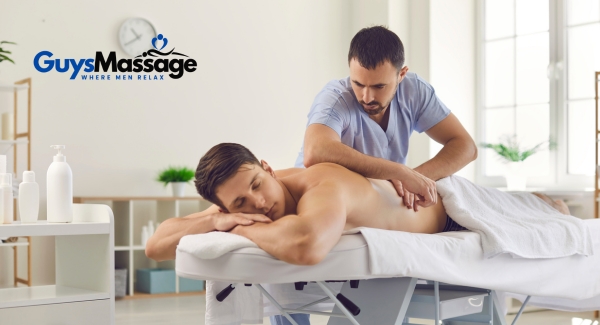
Guys Massage is a worldwide platform focused on professional male massage therapists, with practitioners advertising massage services in the UK and internationally. Rather than treating male therapists as a filter within a much broader website, the platform makes them the starting point of the search.
That still leaves the client with some decisions to make.
A useful therapist profile should tell you more than what the practitioner looks like. Check the treatments offered, location, professional background where provided, whether appointments take place at a treatment venue or on a mobile basis, pricing information and practical details about availability.
Most importantly, read what the therapist actually offers. A specialist directory narrows the search, but choosing the right individual still requires a little attention.
A good massage starts before the treatment does
Clients do not need to know the technical name of every massage style before making an appointment.
You should be able to explain what you want in ordinary language. Your shoulders feel tight after work. Your legs are tired after training. You prefer lighter pressure. You mainly want to relax. There is an area you would rather the therapist avoided.
A professional therapist can then explain what is appropriate within the treatments they offer.
This conversation also establishes boundaries and expectations. Pressure should be adjustable. The areas being treated should be clear. Clothing and draping arrangements should be explained where necessary. A client should be able to say that something feels uncomfortable or ask for the pressure to be changed without feeling awkward about doing so.
Good massage is not something a client has to endure.
When massage is not the next step
There is a difference between ordinary muscular tiredness and a problem that needs assessment.
Sudden or severe pain, substantial swelling, significant loss of movement, an obvious injury or unexplained symptoms that persist may need appropriate medical or physiotherapy assessment rather than another massage appointment.
Relevant health information should also be discussed with the therapist when it could affect the treatment.
A professional therapist should be willing to say when something falls outside their scope. That is good practice, not a failure to provide a service.
Do not use massage to postpone an assessment
If something feels genuinely wrong rather than simply tired, tight or sore, finding out what is causing it matters more than trying increasingly firm massage. A massage therapist can provide professional treatment for appropriate muscular tension and relaxation, but does not replace medical diagnosis.
Making massage part of a realistic routine
There is no universal timetable saying that a man should have a massage every week, every fortnight or once a month.
Someone preparing for a sporting event may book more frequently during a demanding training period. Another person may arrange a massage after particularly difficult weeks at work. Someone else may simply value having a regular appointment because it encourages them to stop for an hour and pay attention to how their body feels.
The useful frequency is the one that has a purpose, suits the individual and makes sense financially.
That is perhaps the broader point about men's wellbeing too. Looking after yourself should not become another performance target.
You do not need an impressive reason to rest. Sometimes looking after yourself means training. Sometimes it means sleeping instead of training. Sometimes it means speaking to somebody when things are difficult. And sometimes it means booking a professional massage because your body has had a demanding week and an hour spent doing very little sounds like a sensible use of time.
Looking after your body works better as maintenance than damage control. Massage is only one part of that, but for many men it can be a practical and straightforward part of taking their wellbeing seriously.